
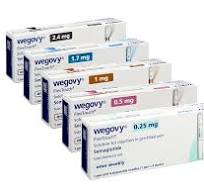
These are medicines used in the management of Type 2 diabetes and also helps people with heart disease or prone to develop one. All, but for one tablet at present, are injections. Victoza ( daily dose), Saxenda ( daily dose), Trulicity (weekly dose) are still being used. Most use this as first line treatment for weight management. Many use this on their own and do not consult a doctor for the same.
The patients tend to lose fat, preserve muscle, improve metabolic health, and become physically stronger — not just lighter on the weighing scale.
Obesity behaves more like a chronic biological condition, similar in principle to hypertension, diabetes, or asthma, rather than like a temporary infection that can be cured permanently with a short course of treatment.
From an evolutionary point of view, the human body was designed more for survival than for beauty, fitness, or modern metabolic health. Thousands of years ago, our ancestors did not live in an environment of continuous food availability, sedentary work, and excess calories. They faced repeated periods of famine, food scarcity, infection, and physical hardship. In such an environment, the ability to store fat was not a disease. It was a survival advantage. A person who could conserve energy and store fat had a better chance of surviving periods of starvation. In that sense, fat storage was once a protective mechanism.
Obesity, as we see it today, became a disease mainly when the environment changed: food became plentiful, physical activity decreased, and calorie intake became continuous. But our genes have not changed as fast as our lifestyle has changed. Even today, when weight is lost, the body often interprets it almost like a biological threat. Appetite may increase, energy expenditure may fall, and powerful hormonal and neural signals may push the body to regain the lost weight. This is one reason why people often regain weight after stopping Ozempic, Mounjaro, or similar medicines. These drugs help reduce appetite, improve satiety, and decrease food intake. But when the drug is stopped, the underlying biological drive to regain weight may return. So weight regain after stopping GLP-1 therapy is not simply due to lack of discipline. It reflects a deep evolutionary imprint within our biology — a body still programmed to protect us from starvation, even while we are living in an age of abundance.
The tragedy of modern obesity is this: What once protected us from famine now predisposes us to diabetes, hypertension, fatty liver, sleep apnoea, heart disease, kidney disease, and many other lifestyle-related illnesses.
Who must not use this medicine:
This medicine is not to be used in those having Type 1 diabetes ( those who are dependent on external insulin jabs as their pancreas are not working)- these can be used under supervision for weight loss as these patients gain weight with the insulin jabs. However, the doses of insulin may come down when being on the GLP1RA class of medicines , which might precipitate a ketoacidosis, a life threatening condition.,
Those who are pregnant or breast feeding, those who have been treated for pancreatitis, those who are already on treatment for severe gastritis, and those who are chronic alcoholics.
Those who have a history of medullary cancer of thyroid are not allowed to take this class of medicine.
The drugs under this class
Injectables : Ozempic ( semaglutide- a pure GLP 1 receptor agonist, available in 0.25 mg, 0.5 mg, 1.0 mg, 1.7 mg, 2.4 mg and 7.2 mg) and Mounjaro ( tirzapetide- a GLP1 Receptor agonist and GIP analogue- dual agonists, available in 2.5 mg, 5.0 mg, 7.5 mg, 10 mg, 12.5 mg and 15 mg ) are dosed weekly. A pen is for a month and contains 4 weekly doses. It can be administered before or after a meal. These are expensive injections. When on this class of medicine, the doctors will adjust the other diabetes medicines. Before being started on medicines, the doctor will do some blood tests to ensure there is no issues. Now – a -days Retatrutide , a triple agonist ( a GLP 1 receptor agonist, GIP agonist and Glucagon agonist) is still in its final phase of trials. Setmelanotide can be used for children 6 years and younger, with genetic obesity. Amylin /GLP 1 agonist and Bimgrumab are in the pipeline.
Oral semaglutide marketed as Rybelsus ( 3 mg, 7 mg and 14 mg- recently 25 mg tablet is also available in some parts of the world) and Orforglipron ( 0.8mg, 2.5 mg, 5.5 mg, 9.0 mg, 14.5 mg and 17.2 mg) are the only 2 oral GLP 1 receptor analogues available as of now. Oral semaglutide must be taken before food with half a glass of water. However, Orforglipron can be taken at any time of the day with no limitation on food or amount of fluid taken when taking the medicine. If a patient on injectable semaglutide 2.4 mg wants to switch over to tablet semaglutide 25 mg, wait for a week and then switch over. However, for a patient on tablet 25 mg who wishes to switch over to injection semaglutide 2.4 mg, he/ she can take the jab the following day.
Semaglutide, known by brand names such as Ozempic and Wegovy, and tirzepatide, known by brand names such as Mounjaro and Zepbound, have produced weight loss far beyond what was previously achievable with older weight-loss medications. They also offer important metabolic and cardiovascular benefits, especially in appropriately selected patients with obesity, type 2 diabetes, cardiovascular disease, fatty liver, sleep apnoea, and related metabolic problems.
It was previously believed that these medicines were not good for children. GLP1RA medicines, Liraglutide and semaglutide are approved for children aged 12 years and above.
Side effects:
When people stop using this medicine, there are chances for a rebound craving and hunger. It is up to you to control your mind cravings in the first place. After all, these are all chemicals that are being injected.
There will be high chances of muscle wasting especially of the limbs when on this medicine ( sarcopenia). It is important to be be doing exercises and resistance exercises when on this medicine.
There are instances when one may not lose much weight despite being on this class of medicines. These people are labelled as non responders. Those with multiple endocrinology issues may not respond to this class of medicines at all.
The gastrointestinal side effects, including:
- nausea
- vomiting
- constipation
- abdominal discomfort
- delayed gastric emptying
Delayed gastric emptying is especially important before anesthesia or procedures requiring sedation. Anesthetists now commonly ask whether a patient is taking semaglutide, tirzepatide, or related drugs because of concern about retained gastric contents and aspiration risk. People on this class of weekly once medicines must stop this medicine 1 to 2 weeks prior to any operative procedure requiring anesthesia.
Usually associated with constipation due to the delayed transit time in the intestine. However, this can be overcome with slow up- titration of the dose, walking after meals and improving fluid intake.
“Ozempic face” is not a true disease caused by Ozempic. It is a popular term used to describe facial hollowing, sagging, and an aged appearance that may follow rapid or marked weight loss. When someone loses 20 or 25 kg, fat is lost not only from the abdomen and body, but also from the face. Facial fat gives fullness to the cheeks and support to the skin. When this volume is lost quickly, the face may look hollow, loose, or older. The same appearance may occur after bariatric surgery or any major weight loss. So this is not a direct drug toxicity. It is largely a consequence of rapid weight loss and loss of facial fat.
Some patients on GLP-1–based therapy report:
- reduced appetite
- reduced interest in food
- less reward from eating
- fatigue
- emotional flatness
- low mood
- reduced social enjoyment
The commonest and expected effect is reduced appetite and reduced food reward. A patient may say, “Doctor, I do not enjoy food the way I used to.” This may simply reflect the intended action of the drug on appetite, satiety, craving, and reward pathways.
If a patient says, “I do not enjoy food anymore,” that may be part of appetite and reward reduction. But if the patient says, “I do not enjoy anything anymore — food, family, hobbies, music, work, social life; everything feels flat,” then it can mean true anhedonia. Generalized anhedonia affecting all areas of life is not something we should dismiss as a routine expected effect of GLP-1 therapy. It should prompt evaluation for depression, undernutrition, metabolic problems, intercurrent illness, sleep disturbance, or interaction with other medications.
Precautions :
When on these medicines, it is important to note that spicy, oily food, cakes, pizzas, burgers, fried food, chips, and high fat food will cause bloating, indigestion and distension of the abdomen. Wheat products and dairy products may not go well when on these medicines.
It is important to eat in less quantities and when hungry.
Walk soon after each meal.
Soda and alcohol do not go well when on this medicine.
Many have even lost the craving for smoking cigarettes. Have the eyes checked out before initiating the medicine especially they have been diagnosed as having retinopathy.
The risk to benefit ratio:
Consider a 120-kg patient with type 2 diabetes, HbA1c of 9%, hypertension, sleep apnoea, fatty liver, and previous myocardial infarction. Initiating a GLP-1–based therapy may produce:
- meaningful weight reduction
- better glycemic control
- lower cardiovascular risk
- improvement in fatty liver
- improvement in sleep apnoea
- better functional capacity
- improvement in HFpEF symptoms in selected patients
- renal and metabolic benefits
These benefits can be life-changing. Therefore, the biological cost should always be discussed alongside the biological benefit.
To summarize, GLP-1–based therapies are powerful metabolic tools. They are not cosmetic shortcuts and they are not magic injections. They require careful patient selection, proper counselling, nutrition, exercise, monitoring, and long-term planning.
They have real trade-offs, including gastrointestinal side effects, possible loss of lean mass, peri-anesthetic concerns, and weight regain after discontinuation. But, in appropriately selected patients with obesity, diabetes, and cardiometabolic risk, the overall benefit-to-risk ratio can be highly favorable. The aim is not simply to make people thinner, but to make them metabolically healthier, biologically safe and physically stronger.